Negareh Journal

Negareh Journal

A Comparative Analysis of the Visual Elements, Symbolism, and School Influences in the Illustrations of Solomon and Bilqis in the Safavid Shiraz School (The David Collection and the Freer Gallery)

Document Type : Research Paper

Authors
1 MA Student in Islamic Art, Faculty of Art & Architecture, Tarbiat Modares University, Tehran, Iran, (Corresponding author).
2 Associate Professor, Department of Islamic Art, Faculty of Art & Architecture, Tarbiat Modares University, Tehran, Iran.
Abstract
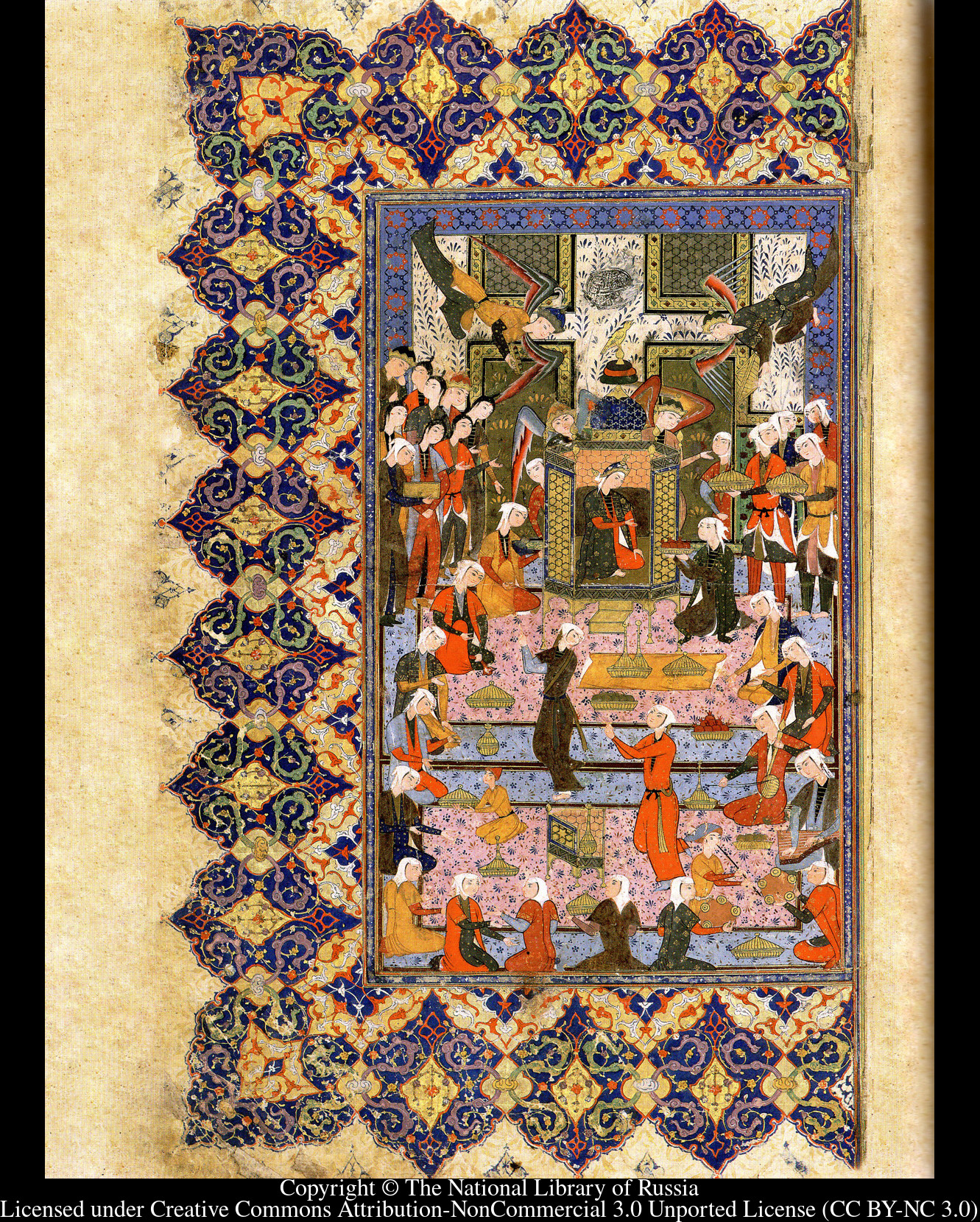
Introduction: The Safavid period marks a peak in Iranian visual arts, especially miniature painting, supported by political stability and royal patronage that produced numerous illustrated Shāhnāmeh manuscripts. Frontispiece illustrations, often double-page compositions with refined illumination, vibrant colors, and extensive gold, served beyond decoration as statements of royal authority and legitimacy. They frequently depicted battle, festivity, or mythological scenes affirming dynastic grandeur. The Qur’anic narrative of Solomon (Sulaymān) and Bilqīs became a favored frontispiece subject from the mid-ninth/fifteenth century. As a prophet-king commanding humans, jinn, animals, and winds, Solomon embodied the ideal of combined spiritual and temporal power. The Safavid Shiraz school, rooted in Inju and Timurid traditions, reached refinement in the sixteenth and early seventeenth centuries. While absorbing influences from Tabriz, Mashhad, and Qazvin, it retained distinctive traits: naturalism, meticulous detail, vibrant costume, crowded compositions, ultramarine-gold palette, and a modular grid-based structure integrated with text. Many dispersed Shiraz manuscripts remain understudied. This article examines two anonymous frontispiece pairs of Solomon and Bilqīs: one from a Shāhnāmeh dated 940–950 AH / 1533–1543 CE in the David Collection, Copenhagen, and another from a Shāhnāmeh dated 990–1000 AH / 1582–1592 CE in the Freer Gallery of Art. These previously unexamined works illuminate the visual language, symbolism, and inter-school dynamics of Safavid Shiraz painting.
Purposes & Questions: The principal aim is to identify shared features and distinctive differences in visual elements, symbolism, and school influences in the two frontispiece pairs. The study examines how Shiraz artists imaginatively reinterpreted the Solomon–Bilqīs narrative through visual and symbolic means, how compositional and iconographic choices evolved over the fifty-year interval, and how earlier traditions— Ilkhanid, Timurid, and early Safavid styles of Tabriz and Qazvin—shaped their formal and symbolic vocabulary. Three research questions guide the inquiry: (1) How is the artist’s imaginative interpretation of the Solomon and Bilqīs narrative manifested through visual and symbolic motifs in each pair? (2) What commonalities and unique differences appear in visual compositions, figural types, architectural settings, and treatment of supernatural beings? (3) In what ways have earlier painting traditions influenced the stylistic, structural, and symbolic qualities of these Shiraz works? Addressing these questions advances understanding of the Safavid Shiraz school’s identity within Persian manuscript painting and highlights frontispiece imagery as a vehicle for the intertwined ideals of kingship, prophecy, and divine favor.
Methods: The research employs a descriptive-analytical methodology grounded in iconography and supported by library investigation. Iconographic analysis decodes layered meanings of motifs—thrones, angels, demons (dīv), animals, birds, architecture, and landscape—while comparative analysis identifies formal, compositional, and symbolic correspondences and divergences. Each pair is examined independently for composition, geometry (hidden frameworks, golden-section divisions, index-square placement of principal figures), figural typology, color symbolism, and fidelity to the Qur’anic account in Sūrat al-Naml. The pairs are then compared, and their relation to selected earlier and contemporary manuscripts (Shāhnāmeh of Shah Tahmasp, Khamsa of Shah Tahmasp, Shāhnāmeh of Shah Ismail II, and Shāhnāmeh of Qavam) is assessed to trace influence. Sampling was purposeful: the two double-page frontispieces were selected from a corpus of approximately twenty-five Solomon–Bilqīs illustrations for their shared Safavid Shiraz attribution, use of gold and silver, and status as opening pages of Shāhnāmeh manuscripts.
Findings and Results: Comparative analysis reveals clear contrasts illuminating continuity and change within the Safavid Shiraz school. The David Collection frontispieces (ca. 1533–1543 CE) project Solomon’s regal power through a resplendent throne with arabesques and dragon heads, dense demons, rich animals and birds (hoopoe, simurgh, predator and prey at a silver pool), elaborate architecture with star-and-cross tiled floors, and a golden sky. These features echo Ilkhanid and Timurid conventions of lavish royal imagery. Bilqīs appears veiled and contemplative, emphasizing wisdom; demons around her suggest temptation. Silver marks water and gold marks celestial elements. By contrast, the Freer Gallery frontispieces (ca. 1582–1592 CE) adopt a restrained composition privileging Solomon’s spiritual authority and the ideal of the just ruler uniting religion and governance. The outdoor setting features spongy rocks, blue sky with swirling clouds, and paired Safavid carpets. Angels display naturalistic Iranian faces, some wearing börk headgear; one dances amid musicians, introducing Samā. Demons are fewer and distant; animals are largely omitted from Bilqīs’s page. Bilqīs reclines unveiled and relaxed, aligning with Shiraz naturalism. Solomon’s calm posture, Iranian features, and subdued palette underscore a spiritual ideal of kingship. Both pairs use Shiraz network composition, placing principal figures in index squares above the midline. Shared motifs—thrones, angels with golden flames or fruit, animal-headed demons, the simurgh, and gold-ultramarine symbolism—demonstrate iconographic continuity. Differences reflect chronological development: the earlier works retain stronger Mongol–Timurid traits and denser supernatural populations; the later works show greater naturalism, open space, and integration of Safavid courtly fashion. Inter-school analysis confirms that David Collection illustrations draw on dragon and rocky-landscape conventions of Aqa Mirak and Tabriz artists, while Freer illustrations affiliate more closely with later Shiraz and Qazvin works, including the Shāhnāmeh of Qavam.
Keywords
Subjects

آقاحسینی، ح.، و جمالی، ف. (1384). بررسی و تحلیل بازتاب هدهد در ادب فارسی. مجله دانشکده ادبیات و علوم انسانی دانشگاه اصفهان، ۲(۴۲-۴۳)، ۲۲۷-۲۵۰. https://2.189.160.148/155972
افراسیابی، د.، و علیزاده، س. (1393). مطالعه تطبیقی دو نگاره‌ی جنگ اژدها با رستم/اسفندیار در مکتب شیراز در دوره‌ی آل اینجو و تیموری. پیکره، ۳(۶)، ۶۳- ۷۴. https://doi.org/10.22055/pyk.2015.13208
افشار مهاجر، ک.، و بهشتی، ط. (١٣٩۴). چگونگی روند ترکیب‌بندی در نگاره‌های ایرانی موردپژوهشی (نگاره بازی شطرنج بوزرجمهر و سفیر هند از نسخة خطی شاهنامة بایسنقری). آینه میراث، ٢(١٣)، ٩- ٣٢. https://elmnet.ir/doc/1482429-23818
افشاری، م.، آیت‌اللهی، ح.، و رجبی، م. (۱۳۸۹).  بررسی روند نمادگرایی شمایل‌ها در نگارگری اسلامی از منظر نشانه‌شناسی. مطالعات هنر اسلامی، ۱۳ (پاییز و زمستان)، ۳۷- ۵۴. https://www.noormags.ir/1206556
بلخاری قهی، ح. (۱۳۸۴). جایگاه کیهان‌شناختی دایره و مربع در معماری مقدس (اسلامی). هنرهای زیبا، ۲۴(۰)، ۵-۱۴. https://jhz.ut.ac.ir/article_13876.html
بینیون، ل.، ویلکینسون، ج. و.س.، و گری، ب. (۱۳۶۷). سیر تاریخ نقاشی ایرانی (م. ایرانمنش، مترجم). امیرکبیر. https://bookroom.ir/book/90050 (نسخه اصلی منتشرشده در ۱۹۷۱).
پاکباز، ر. (۱۳۸۵). نقاشی ایران از دیرباز تا امروز. نشر زرین؛ سیمین. https://taaghche.com/book/232677
حریری, ع.، و چاووشی، م. (1402) آتش در هنر نگارگری ایرانی: معناشناسی و بعد نمادین آتش در فرهنگ ایرانی. مطالعات هنر، ۲(۲)، ۵۰-۱۲۵. https://ssa.ricac.ac.ir/article_195137.html
حسامی، ح.، و شیخی، ع. (۱۴۰۱). سیر تحول دیو نگاری در نگارگری ایرانی با تأکید بر شاهنامه نگاری از دوره ایلخانی تا پایان دوره قاجار، نگره، ۱۷(۶۴)، ۱۰۵-۱۲۵. https://doi.org/10.22070/negareh.2020.5558.2516
خزایی، م. (1386) نقش نمادین طاووس در هنرهای تزئینی ایران. کتاب ماه هنر، ۱۱۱-۱۱۲ (آذر و دی)، 6-12. https://www.noormags.ir/481619
دهخدا، ع. (۱۳۷۲). لغت‌نامه دهخدا (م. معین، و ج. شهیدی، نظارت‌کنندگان). دانشگاه تهران، مؤسسه انتشارات و چاپ. https://fa.wikinoor.ir/DehkhodaDictionary
رضی، ه. (۱۳۸۱). آیین‌مهر: پژوهش‌هایی ‌در تاریخ آیین راز آمیز میترایی در شرق و غرب (ج. ۱). نشر بهجت. https://books.google.com/books/about/%D8%A2%DB%8C%DB%8C%D9%86_%D9%85%D9%87%D8%B1.html?id=sNJgswEACAAJ
رنجبر، پ. (1399) درآمدی بر نقشمایه طاووس در فرهنگ و هنر اسلامی. مجله فقه و تاریخ تمدن، ۶(۲)، ۴۲-۴۷. https://www.noormags.ir/1847698
ریشارد، ف. (۱۳۸۳). ج‍ل‍وه‌ه‍ای‌ ه‍ن‍ر پ‍ارس‍ی‌: ن‍س‍خ‍ه‌ه‍ای‌ ن‍ف‍ی‍س‌ ای‍ران‍ی‌ ق‍رن‌ ۶ ت‍ا ۱۱ ه‍ج‍ری‌ ق‍م‍ری‌ م‍وج‍ود در ک‍ت‍اب‍خ‍ان‍ه‌ م‍ل‍ی‌ ف‍ران‍س‍ه‌ (ع. روح بخشان، مترجم). ت‍ه‍ران‌: وزارت‌ ف‍ره‍ن‍گ‌ و ارش‍اد اس‍لام‍ی‌، س‍ازم‍ان‌ چ‍اپ‌ و ان‍ت‍ش‍ارات. https://cir.nii.ac.jp/crid/1970867909857690396
شایسته فر، م. (۱۳۸۹). مقایسه تصویری قصه‌های پیامبران در قرآن و تورات. نشریه بیناب (سوره مهر)، ۱۶(آذر)، ۱۸۶- ۲۱۳. https://www.noormags.ir/1034225
شایگان، د. (۱۳۸۵). ه‍ان‍ری‌ ک‍رب‍ن‌: آف‍اق‌ ت‍ف‍ک‍ر م‍ع‍ن‍وی‌ در اس‍لام‌ ای‍ران‍ی‌ (ب. پرهام، مترجم). نشر و پژوهش فروزان روز. https://www.iranketab.ir/book/86264-hanry-corbin
صباغ‌پور آرانی، ط.، و شایسته‌فر، م. (۱۳۸۸). تأویل و تفسیر معانی نمادین نقش‌مایه ماهی در قالی‌های دوره صفویه با نظر به مثنوی معنوی مولانا. نشریه علمی گلجام، ۵(۱۲)، ۳۱- ۵۴. https://goljaam.icsa.ir/article-1-409-fa.html
صداقت، ف. (۱۳۸۵). شاهنامه شاه‌تهماسبی: شاهکار مصورسازی مکتب تبریز. مطالعات هنر اسلامی، ۵، ۴۵-۷۲. https://www.noormags.ir/79252
صدری، م.، و کشیر، م. (١۴٠١). مقایسه نظام ترکیب‌بندی سه نگارة رزم از سه مکتب در نسخه خمسه نظامی ١۴۴٢م/٨۴٦ ق. نگره، ۱۷(۶۱)، ۴٨-٦٥. https://negareh.shahed.ac.ir/article_3501.html
طبری، م. ج. ط. (۱۳۵۳). تاریخ بلعمی: تکمله و ترجمه تاریخ طبری (ج. ۱؛ الف. م. بلعمی، مترجم؛ م. بهار «م‍ل‍ک‌ال‍ش‍ع‍راء»، مصحح؛ م. پروین گنابادی، ویراستار). تهران: زوار. https://archive.org/details/TarikhBalami/Tarikh_Balami_book2/page/n1/mode/2up
عبداله، ز.، و شایسته فر، م. (1392). نقش و نماد اژدها در نگارگری ایرانی. پیکره، ۲(۴)، ۴۳-۵۸. https://doi.org/10.22055/pyk.2014.12977
عطار نیشابوری، ف. (1387). منطق‌الطیر (ک. شفیعی کدکنی، مصحح). تهران: نشر سخن. https://sokhanpub.net/%D9
عطاریان، ب.، و ندرلو، م. (1403) شاهنامه قوام جلوه‌ای دیگر از هنر نگارگری شیراز دوره صفوی. پیکره، 13(38)، ۱۸-۳۵. https://doi.org/10.22055/pyk.2024.19419
غفوری فرد، ف.، شمیلی، ف. (1396). جستاری در ساختارشناسی طرح و نقش تذهیب‌های قرآنی عصر تیموری موجود در موزه آستان قدس رضوی. کتابداری و اطلاع‌رسانی، ۲۰(۳)، 23-49. https://lis.aqr-libjournal.ir/article_50170.html?lang=en
فلاحی، س. خ. (۱۳۹۹). بهره‌مندان اسم اعظم از نگاه قرآن روایات و تفاسیر عرفانی. ادیان و عرفان تطبیقی، ۴(۷)، ۱۹-۳۶). https://www.noormags.ir/1823072
قاضی‌زاده، خ. (۱۳۸۲). هندسه پنهان در نگاره‌های کمال‌الدین بهزاد. خیال، 6، 4-29. https://elmnet.ir/doc/1350867-11215
قرآن کریم (م. م. فولادوند، مترجم). (1390). نشتا. https://www.iketab.com/Quran
کاظم، م. (۱۳۸۵). تحلیل منتخبی از نگاره‌های قصص‌الانبیا، متعلق به اواخر قرن دهم و اوایل قرن یازدهم هجری قمری محفوظ در کتابخانه ملی پاریس. هنر، ۶۸ (تابستان)، ۱۲۲- ۱۶۳. https://www.noormags.ir/334975
کشمیری، م.، و رهبرنیا، ز. (1396). بازتاب اندیشه‌های علمی در نگارگری. هنرهای زیبا: هنرهای تجسمی، ۲۲(۳)، ۸۵-۹۴. https://doi.org/10.22059/jfava.2017.63171
کلینی، م. ی. (۱۳۶۳). الأصول من الکافی (ع. غفاری، و م. آخوندی، مصححان؛ ۸ ج.). تهران: دارالکتب الاسلامیه. https://noorlib.ir/book/info/1348/%D8%A7%D9%84%DA%A9%D8%A7%D9%81%D9%8A
معین الدینی، م.، و اولیائی شاد، آ. (1400). تعامل ویژگی‌های بومی نگارگری دکن با نگارگری ایرانی در نسخه فالنامه گلکنده/ خلیلی. رهپویه هنرهای تجسمی، ۴(۲)، ۲۳- ۳۱. https://doi.org/10.22034/ra.2021.244949
معین، م. (1386). فرهنگ فارسی معین: بر اساس فرهنگ شش جلدی دکتر محمد معین (۱ ج.). معین. https://ketab.ir/Book/6529DB0C-7709-4F62-920D-C4963A13D147
ملک پائین، ع.، و چانگ هونگ، ژ. (١٣٩٨). بررسی هندسه پنهان در مکتب نگارگری هرات؛ با تأکید بر نگاره به لشکر نمودن اسکندر، سخن گوشه‌نشینان را. نگره، ١۴(٥٢)، ۵-۲۳. https://negareh.shahed.ac.ir/article_1049.html
مهرپویا، ح.، سلیمی پور، ب.، شاکرمی، ط.، شریفی نیا، الف. (1396). بررسی تطبیقی نگاره دیو در مکاتب نگارگری ایران از دوره ایلخانی تا پایان دوره قاجار. مطالعات ایرانشناسی، ۳(۳)، ۱۸-۴۰. https://is.iranology.ir/article_711080.html?lang=en
نقوی، م. س.، و مراثی، م. (۱۳۹۱). مطالعه تطبیقی کلاه مردان در سفرنامه‌ها و نگاره‌های دوران صفوی با تأکید بر دیوارنگاره‌های کاخ چهلستون اصفهان. مطالعات تطبیقی هنر، ۲(۳)، ۱–۱۶. بازیابی شده در ۲۹ شهریور، ۱۴۰۴، از https://mth.aui.ac.ir/files/site1/pages/Tatbighi__III.pdf
یاحقی، م. ج. (۱۳۸۶). فرهنگ اساطیر و داستان واره‌ها در ادبیات فارسی. فرهنگ معاصر ایران. https://www.iranketab.ir/book/23450-the-dictionary-of-myths-and-fiction-in-persian-literaturee
Abdollah, Z., & Shayestehfar, M. (2014). The icon and symbol of dragon in Persian literature and painting. Paykareh, 2(4), 43-58. https://doi.org/10.22055/pyk.2014.12977 [In Persian].
Afrasiabi, D., & Alizadeh, S. (2015). Two miniatures of the battle between Rustam and Dragons in Shirazi School in Al-e-Injoo and Timurid eras: A comparative study. Paykareh, 3(6), 63-74. https://doi.org/10.22055/pyk.2015.13208 In Persian].
Afshari, M., Ayatollahi, H., & Rajabi, M. (2010). An examination of the symbolism of figural representations in Islamic painting from a semiotic perspective. Islamic Art Studies, 13 (Fall and Winter), 37–54. https://www.noormags.ir/1206556 [In Persian].
Afsharmohajer, K., & Beheshti, T. (2015). How the process of composition is formed in Iranian paintings: A case study of the painting“Bozorgmehr playing chess with the Indian ambassador”from the Baysonghori Shahnameh manuscript. Ayeneh‑ye Miras, 2(13), 9–32. https://elmnet.ir/doc/1482429-23818 [In Persian].
Aghahosseini, H., & Jamali, F. (2005). An investigation and analysis of the reflection of the Hoopoe in Persian literature. Journal of the Faculty of Letters and Human Sciences, University of Isfahan, 2(42–43), 227–250. https://2.189.160.148/155972 [In Persian].
Al-Kulayni, M. Y. (1984). Al-Usul min al-Kafi (A. Ghaffari & M. Akhundi, Eds.; 8 vols.). Dar al-Kutub al-Islamiyyah. https://noorlib.ir/book/info/1348/%D8%A7%D9%84%DA%A9%D8%A7%D9%81%D9%8A [In Arabic].
Attar Neyshaburi, F. (2008). Mantiq al-Tayr (M. Shafi‘i Kadkani, Ed.). Tehran: Sokhan. https://sokhanpub.net/%D9 [In Persian].
Attarian, B., & Naderloo, M. (2024). Qavam Shahnameh, another erspective on the art of Persian painting in Shiraz during the Safavid period. Paykareh, 13(38), 18-35. https://negareh.shahed.ac.ir/article_3501.html [In Persian].
Bilqis enthroned [One of a group of twenty-five folios; Folio from a dispersed copy of the Shahnama (Book of kings) by Firdawsi (d. 1020); text: Persian in white nasta'liq script; recto: left-hand half of a double page frontispiece, facing folio (S1986.196.1); verso: right-hand half of a double page frontispiece, text: the preface; facing folio (S 1986.196.3); Material: Ink, opaque watercolor and gold on paper; Dimension: H x W: 32 x 19.1 cm; Shiraz, Iran]. (Ca. 1580 CE.). Smithsonian, National Museum of Asian Art. Accession Number: S1986.196.2. https://asia.si.edu/explore-art-culture/collections/search/edanmdm:fsg_S1986.196.2
Binyon, L., Wilkinson, J. W. S., & Gray, B. (1988). Persian Miniature Painting (M. Iranmanesh, Trans.). Amir Kabir. https://bookroom.ir/book/90050 (Original work published 1971). [In Persian].
Bolkhari Ghehi, H. (2005). Cosmological position of circle and square in sacred (Islamic) architecture. Honar-Ha-Ye-Ziba, 24(0), 5–14. https://jhz.ut.ac.ir/article_13876.html [In Persian].
Brend, B., & Melville, C. (2010). Epic of the Persian Kings: The Art of Ferdowsi's Shahnameh. I. B. Tauris & Company. https://www.biblio.com/9781848853324
Carpet with a Compartment Design. [Made in Iran; Medium: Silk (warp and weft), wool (pile); asymmetrically knotted pile; Dimensions: Rug: 497.8 cm., 340.4 cm., Tube: H. 370.8 cm.; Weight: 79 lbs.]. (First half 16th century). The Metropolitan Museum of Art, Curatorial Department of Islamic Art. Object Number: 10.61.3. https://www.metmuseum.org/art/collection/search/445996
Dehkhodā, ʿA. (1993). Loghat‑nāmeh‑ye Dehkhodā [Dehkhoda Dictionary] (M. Moʿin & J. Shahīdī, Supervisors). University of Tehran Press. https://fa.wikinoor.ir/DehkhodaDictionary [In Persian].
Fallahi, S. K. (2020). Beneficiaries of the Greatest Name (Ism al-A’zam) from the Perspective of the Quran, Hadiths, and Mystical Commentaries. Comparative Religions and Mysticism, 4(7), 19–36. https://www.noormags.ir/1823072 [In Persian].
Ghafurifar, F., & Shamili, F. (2017). An investigation into the structure of the figures and patterns of Quranic illuminations of the Timurid era preserved in the Museum of Astan Quds Razavi. Library and Information Sciences, 20(3), 23-49. https://lis.aqr-libjournal.ir/article_50170.html?lang=en [In Persian].
Hariri, A., & Chavoshi, M. A. (2023). Fire in the art of Iranian painting: Semantics and symbolic dimension of fire in Iranian culture. Strategic Studies of Art, 2(2), 125-50. https://ssa.ricac.ac.ir/article_195137.html?lang=en [In Persian].
Hessami, H., & Sheikhi, A. (2022). The survey of transformation of the demon illustration in Iranian painting with emphasis on Shahnameh illustrations from the Ilkhanid period to the end of the Qajar period. Negareh Journal, 17(64), 105-125. https://doi.org/10.22070/negareh.2020.5558.2516 [In Persian].
Image of the reception of pomegranates [A leaf from the Shirazi version of the Shahnameh, Russia, by Firdawsi (d. 1020)]. (n.d.). Retrieved May 21, 2025, from https://images.lib.cam.ac.uk/content/images/MS-STPETNLR-DORN-00334-000-00001.jpg
Kazem, M. (2006). An analysis of selected illustrations from Qisas al-Anbiya, dating from the late tenth and early eleventh centuries AH and held at the National Library of France. Honar, 68, 122–163. https://www.noormags.ir/334975 [In Persian].
Keshmiri, M., & Rahbarnia, Z. (2017). Manifestation of sientific ideas in Persian miniature paintings: The significance of Silver in representing water based on optics. Journal of Fine Arts: Visual Arts, 22(3), 85-94. https://doi.org/10.22059/jfava.2017.63171 [In Persian].
Khazaei, M. (2007). The symbolic role of the peacock in Iranian decorative arts. The Art Book Monthly, 111–112, 6–12. https://www.noormags.ir/481619 [In Persian].
Malekpaein, A., & Changhong, Z. (2019). Study of hidden geometry in the Painting of Herat School; With emphasis on illustration Demonstrating the Speech of Ascetics to the Troops by Eskandar. Negareh Journal, 14(52), 5-23. https://negareh.shahed.ac.ir/article_1049.html?lang=en [In Persian].
Mehrpouya, H., Salimipour, B., Shakarami, T., & Sharifinia, A. (2017). A comparative study of the image of Div in Iranian Painting Schools from the Ilkhanid period to the end of the Qajar era. Iranian Studies, 3(3), 18-40. https://is.iranology.ir/article_711080.html?lang=en [In Persian].
Milstein, R. (2015). King Solomon’s Temple and Throne as Models in Islamic Visual Culture. In B. Kühnel, G. Noga-Banai, & H. Vorholt (Eds.), Visual Constructs of Jerusalem (pp. 187–194). Brepols. https://www.brepols.net/products/IS-9782503551043-1
Moeinaddini,M and Oliayishad,A . (2021). Interaction of indigenous features of deccan painting with Iranian painting in the Golkonda / Khalili Falnama. Rahpooye Honar-Ha-Ye Tajassomi, 4(2), 23-31. https://doi.org/10.22034/ra.2021.244949 [In Persian].
Moin, M. (2007). Farhang‑e Farsi‑ye Moin: Based on the Six‑volume Dictionary of Dr. Mohammad Moin (Vol. 1). Moin. https://ketab.ir/Book/6529DB0C-7709-4F62-920D-C4963A13D147 [In Persian].
Naghavi, M. S., & Marasi, M. (2012). A comparative study of men’s hats in travelogues and miniatures of the Safavid Era with emphasis on the Murals of Chehel Sotoun Palace in Isfahan. Comparative Studies of Art, 2(3), 1–16. Retrieved September 20, 2025, from https://mth.aui.ac.ir/files/site1/pages/Tatbighi__III.pdf [In Persian].
Pakbaz, R. (2006). Iranian Painting from Ancient Times to Today. Zarrin Publishing; Simin Publishing. https://taaghche.com/book/232677 [In Persian].
Qazizadeh, K. (2003). The hidden geometry in the paintings of Kamal al-Din Behzad. Khayal, 6, 4–29. https://elmnet.ir/doc/1350867-11215 [In Persian].
Ranjbar, P. (2020). An introduction to the peacock motif in Islamic culture and art. Journal of Jurisprudence and History of Civilization, 6(2), 42–47. https://www.noormags.ir/1847698 [In Persian].
Raz̤ī, H. (2002). Mithraic Rituals: Studies in the History of the Mystical Mithraic Religion in the East and West (Vol. 1). Behjat Publishing. https://books.google.com/books/about/%D8%A2%DB%8C%DB%8C%D9%86_%D9%85%D9%87%D8%B1.html?id=sNJgswEACAAJ [In Persian].
Rendlová, K. (2013). Solayman and Belqis, the Queen of Sheba: Persian lacquered Panel from the National Gallery in Prague and its Interpretation in the Context of Islamic Art Aesthetics. Bulletin of the National Gallery in Prague. Accession no.: XXII–XXIII/2012–2013. https://admin.www.ngprague.cz/storage/885/NGBULL2012-2013_eng-cz.pdf
Richard, F. (2004). Persian Manuscripts From 12 to 17 Centuries National Library of France. Tehran: Ministry of Culture and Islamic Guidance. https://cir.nii.ac.jp/crid/1970867909857690396 [In Persian].
Sabaghpour Arani, T., Shayesteh-Far, M. (2009). The Iinterpretation of the symbolic meanings of Fish Motif in rugs of the Safavid era in the light of Movlana’s Mathnavi. Goljaam, 5(12), 31-54. http://goljaam.icsa.ir/article-1-409-fa.html [In Persian].
Sadri, M., & Kashir, M. (2022). Comparing the composition system of Three Battle Miniatures in Khamsa of Nizami (1442 AD) belonging to three different Persian painting schools. Negareh Journal, 17(61), 49-65. https://negareh.shahed.ac.ir/article_3501.html [In Persian].
Sedaghat, F. (2006). Shah Tahmasbi’s Shahnameh: Masterpiece of Tabriz School illustration. Islamic Art Studies, 5, 45–72. https://www.noormags.ir/79252 [In Persian].
Shayegan, D. (2006). Henry Corbin: Horizons of Spiritual Thought in Iranian Islam (B. Parham, Trans.). Farzan Rooz Publishing and Research. https://www.iranketab.ir/book/86264-hanry-corbin [In Persian].
Shayestehfar, M. (2010). A visual comparison of the stories of the prophets in the Qur’an and the Torah. Beynab (Soureh Mehr), 16, 186–213. https://www.noormags.ir/1034225 [In Persian].
Solomon enthroned [One of a group of twenty-five folios; Folio from a dispersed copy of the Shahnama (Book of kings) by Firdawsi (d. 1020); recto: blank, obliterated inscription; verso: right-hand half of a double-page frontispiece, facing folio (S1986.196.2); Material: Ink, opaque watercolor and gold on paper; Dimension: H x W: 31.7 x 18.4 cm; Shiraz, Iran]. (Ca. 1580 CE.). Smithsonian, National Museum of Asian Art. Accession Number: S1986.196.1. https://asia.si.edu/explore-art-culture/collections/search/edanmdm:fsg_S1986.196.1
Sturkenboom, I. (2017). Links in a chain of transfer: Pictorial and textual images of Solomon and the Queen of Sheba in the Manṭiq al-Ṭayr. In Beiträge zur islamischen Kunst und Archäologie (Vol. 5, pp. 70–97). Ernst Herzfeld-Gesellschaft. https://doi.org/10.29091/9783954906864
Sulayman og Bilqis på troner [Dobbelt frontispice fra et eksemplar af Firdawsis Shahnama. Iran, Shiraz; Hvert blad: 37,2 × 23,2 cm.]. (Ca. 1540-1550). Park Museums, The David Collection, Copenhagen, Denmark. Inventory number: 83b/2006 & 83a/2006. Retrieved May 04, 2025, from https://www.davidmus.dk/art-from-the-islamic-world/miniature-paintings/item/975
Ṭabarī, M. J. al-. (1974). Tārīkh-i Bal‘amī: Takmila wa tarjuma-yi Tārīkh-i Ṭabarī (Vol. 1; A. M. Bal‘amī, Trans.; M. Bahār “Malik al-Shuʿarā”, Ed.; M. Parvīn Gonābādī, Rev. ed.). Tehran: Aavar. https://archive.org/details/TarikhBalami/Tarikh_Balami_book2/page/n1/mode/2up [In Persian].
The Qur'an (M. M. Fouladvand, Trans.). (2011). Nashta. https://www.iketab.com/Quran [In Persian].
Yahaqqi, M. J. (2007). A Dictionary of Myths and Mythological Narratives in Persian Literature. Farhang-e Moaser Iran. https://www.iranketab.ir/book/23450-the-dictionary-of-myths-and-fiction-in-persian-literaturee [In Persian].
Zarezadeh, F., & Jalilvand, F. (2024). Manifestation of ethical teachings in illustrations of lithographic manuscript called 'Expressing the Story of his Highness Solomon'. International Journal of Religion, 5(1), 3458-3475. Retrieved March 2025, from  https://www.academia.edu/123739547/Manifestation_of_Ethical_Teachings_in_Illustrations_of_lithographic_manuscript_called_expressing_the_story_of_His_Highness_Solomon
Volume 22, Issue 79
Autumn 2026
Pages 4-41

  • Receive Date 06 October 2025
  • Revise Date 02 March 2026
  • Accept Date 04 April 2026
  • Publish Date 23 September 2026